

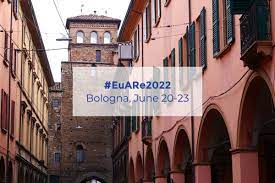
Os dejamos información de los paneles organizados por miembros de la Asociación, y por otros colegas, que abordarán temáticas tan apasionantes como el género, la diversidad religiosa y la recepción múltiple del Concilio Vaticano Segundo. Se pueden enviar proposiciones hasta el 20 de abril.
Panel 1) Women believers working for Peace and Freedom (1915-1963)
«The works of Jane Adams, Vera Brittain, Eglantyne Jebb, Barbara Ward or Betty Friedan have gone down in history for a civic commitment that, starting from their religiosity, took shape in the struggle for peace, freedom and social justice.From the mobilization of the Women’s International League for Peace and Freedom (1915), to the publication of The Feminine Mystique (1963), there are still many untold stories of the many women who, from diverse religious sensibilities, made outstanding contributions to these causes. This panel aims to contribute to the visibility of their work and their figures, analyzing the influence exerted on them by the various stories associated with the spirit».
Chair: Natalia Núñez Bargueño (SciencesPo)
Speakers: Ángela Pérez del Puerto (Universidad Autónoma de Madrid) and José Ramón Rodríguez Lago (Universidade Vigo)
Contact: jrlago@uvigo.es
Panel 2) Religious diversity in postsecular societies
The proposal of postsecularity arises from the realisation that societies that have undergone a process of secularisation are not religious or irreligious, but plural. In this panel, we propose three lines of debate in order to further advance the debate on diversity through the prism of religion.
- What are the main paradigms for interpreting and managing religious diversity in today’s postsecular society? How do we distinguish the interpretation of religious diversity proposed by cultural pluralism from that of multiculturalism?
- What role does religious diversity play in postsecular societies today in the justification or denial of conflict and violence? How the religious is blended with the political and the social in today’s postsecular societies?
- Faith communities reproduce dialogue and conflict not only externally with other communities, but also internally. The “maturity” of immigration processes, together with the demographic dynamics of postsecular societies in Europe, add further complexity to the social practices and relations through which religious diversity is interpreted, defined, represented and managed. What role do the new generations play in the reproduction and restructuring of religious diversity in post-secularsocieties? What reading can we make of phenomena such as Religious feminism (e.g. jewish feminism, christian feminism, and islamic feminism) in post-secular Western societies in the construction of paradigms, the promotion of change and creation of common languages and mutual understanding?
Chair: Francisco Javier Fernández Vallina (Universidad Complutense de Madrid)
Speakers: Zakaria Sajir (CSIC) and Rafael Ruiz Andrés (Universidad Complutense de Madrid)Contact person: Zakaria Sajir zakaria.sajir@cchs.csic.es
Panel 3) History, Diversity and Change: the multilayered reception of the Second Vatican Council (1965-1985)
2022 will mark the sixtieth anniversary of the start of the Second Vatican Council, a historical event that created an environment of dialogue that radically changed the Catholic Church’s understanding of itself: its mission, its relations with the World and with other churches and faiths. It is generally acknowledged that the council’s documents (Gaudium et spes, Nostra aetate, Dignitatis humanae…etc.) redefined the Catholic Church’s relationship to the modern world, but its full implications, extending beyond the council’s formal conclusion, are still intensely debated today.
This panel wishes to reflect on the winds of change and diversity blowing through Rome and the Catholic Church in the aftermath of the Council (1965-1985). Scholars are invited to submit proposals short paper presentations (20 mins max) that explore the Council’s impact, and the diversity in its (non)receptions, not only within the Church (and within local/global Catholicism), but also outside of it. Among other things we will explore:
- The Council in the world, Europe, the Americas, Africa, Asia, including Oceania and the Pacific
- Impact on and reform of Theology, Catholic Social Teaching and Canon Law
- Spirituality, religious life, orders and congregations
- Lived religion, liturgy, pilgrimages, religious practice
- Developments in ecumenism
- Relation of the Church to the broader world of science, culture and politics
- Gender implications, sexual diversity
- Migration, ecology
Chair: Dries Bosschaert (KU Leuven)
Speakers: Verónica García (Universidad de Castilla la Mancha), Julio de la Cueva Merino (Universidad de Castilla la Mancha) Natalia Núñez Bargueño (SciencesPo)
Contact person: natalia.nunezbargueno@sciencespo.fr
Panel 4) Christian Sisterhood
The “Sorority” has great relevance to build the history of women. This frame makes it possible to visualize phenomena that have configured new mentalities and have achieved social change (such as the vision of women not only as a housewife, but also as an intellectual or professional). These are relevant processes that run the risk of not being “recognized” as History because their gestation was almost invisible and did not occupy the first pages of newspapers or did not have great geostrategic influences. In the case of Christian women, it is necessary to make some qualifications. The term “Sorority” shares a certain semantic meaning with the Christian concept of “Fraternity”. The “Fraternity” is “Charity”, the universal love based on the fact that all human beings are children of God, the Father, and brothers of Jesus Christ. From here is born a consciousness of universal love among all people, which becomes more intimate among those who have received baptism. This context reinforces an academic approach to the study of “Sororities” rooted in Christianity that can give rise to socially valuable phenomena.
Chair: Mercedes Montero Díaz (Universidad de Navarra)
Speakers: Inmaculada Alva Rodríguez (Universidad de Navarra)
Contact person: mmontero@unav.es
CONFERENCE SCHEDULE
https://www.europeanacademyofreligion.org/conference-schedule
REGISTRATIONS
#EuARe2022 will see participants and members coming back to Bologna for an in-person event. Registrations are open at the following address:
https://conference.europeanacademyofreligion.org/forms/submit/registration22/.
Four registration periods have been identified and fees vary as shown here.
Early bird rates are our super saver registration fees. If your panel has already been accepted, make sure to grab your spot before Sunday, April 24th to enjoy the highest discount.
TRAVEL GRANTS
Willing to participate, but worried about your travel expenses?
The 2022 host of the EuARe Annual Conference, FSCIRE, offers 70 travel grants of € 300 to under- and postgraduates, PhD students, post-docs, and early career scholars participating in the Conference. The grants are also accessible to those who would like to attend the meeting as auditors, i.e. without offering a conference paper. Find out more about the application and evaluation process here.
Descubre más desde Asociación Española de Historia Religiosa Contemporánea
Suscríbete y recibe las últimas entradas en tu correo electrónico.